Recycling and Sustainability at Gardening Cricklewood
 Gardening Cricklewood is committed to creating an eco-friendly waste disposal area and a thriving sustainable rubbish gardening area that supports local green spaces. Our approach to recycling and sustainability balances practical on-the-ground waste management with community-led reuse and composting schemes. We work to align our operations with borough-level recycling protocols so that residents and businesses in Cricklewood can easily follow the same separation rules applied across Barnet, Brent and Camden — for example, separate food waste, glass, paper/card and mixed recycling streams.
Our core mission is simple: reduce landfill, increase reuse, and grow greener local soil. By focusing on materials commonly generated by gardening and small-scale landscaping — soil, wood, plant cuttings, pots, plastic trays, paper bags and small metal tools — we create a low-impact circular loop where green waste becomes compost and packaging materials are recycled into new products. Recycling for Gardening Cricklewood is not just a slogan; it is a set of measurable actions embedded in day-to-day operations.
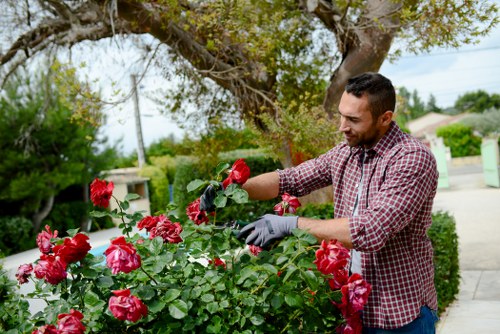
Targets: measurable progress and community ambition
We have set a clear recycling percentage target to drive improvement across the neighbourhood: our immediate aim is to reach a 60% recycling rate for all Gardening Cricklewood waste streams by the end of 2028, up from a baseline of 45% in 2024. This target covers compostable green waste, mixed recyclable packaging and reusable items reclaimed for charity partners. To achieve it we combine better on-site separation, increased community education, and stronger partnerships with local processing centres. Meeting this goal will make our eco-friendly waste disposal area a model for small urban gardening operations.
Local transfer stations and processing hubs
Gardening Cricklewood routes materials to nearby transfer stations and recycling hubs to keep transport distances short and emissions low. We routinely use local transfer stations and community sorting centres to ensure that glass, paper/card, plastics, metal and green waste are sent to the right facilities. Our choices are informed by borough guidance — where boroughs operate separate food waste collections, we prioritise separate bins; where mixed recycling is the norm, we adapt packaging separation to match local streams. The result is streamlined disposal and improved recovery rates.To support the circular economy we also operate an on-site composting area for woody prunings and garden debris; this produces a high-quality soil conditioner that returns nutrients to community beds. We maintain a sustainable rubbish gardening area where reusable pots, clean terracotta and non-contaminated plant support materials are staged for reuse rather than sent to landfill. These initiatives reduce costs and carbon while improving local soil health.
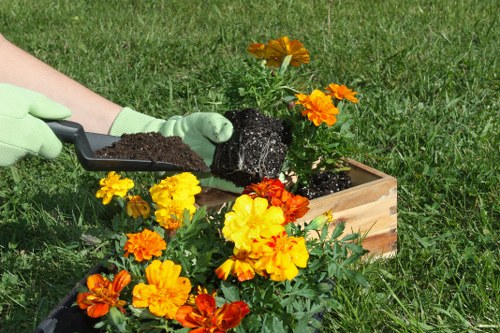
- Waste separation: Clear bins for green waste, mixed recycling, and residual refuse — labelled and placed where volunteers and staff can easily use them.
- Composting: Community-scale hot and cold composting for kitchen scraps and green garden waste.
- Re-use staging: Sheltered areas for salvaged pots, tools and materials destined for charities or local projects.
Partnerships with charities and local organisations
Gardening Cricklewood actively partners with charities and community organisations to maximise reuse and social benefit. We coordinate regular collections of reusable gardening tools and surplus soil from our sustainable rubbish gardening area for redistribution through partners such as local allotment associations and regional environmental charities. These collaborations help disadvantaged community members access tools and compost while keeping usable items out of the waste stream.Our charity partnerships also facilitate collection drives for items that are hard to recycle through municipal schemes — for example, wooden planters in good condition and metal gardening implements. These are either refurbished for reuse or sent to specialist recyclers. Working together with local charities, we also host workshops and exchange events (operationally focused) that promote repair, repurpose and share rather than discard.
Low-carbon transport and operational commitments
To reduce the carbon footprint of our waste logistics we operate a fleet of low-carbon vans: a mix of electric vehicles and Euro 6 hybrid vans until the full EV fleet conversion is complete. Our plan targets a wholly electric service fleet by 2027, cutting transport emissions associated with moving green waste and recyclables to transfer stations. We schedule consolidated collection runs to minimise trips and coordinate with borough collection timetables to reduce duplication. Low-carbon vans are central to our zero-to-low emissions strategy.By combining ambitious recycling targets, practical on-site separation, local transfer station use, charity partnerships, and a shift to low-emission transport, Gardening Cricklewood is building a resilient model of eco-friendly waste disposal and sustainable rubbish gardening. We believe urban gardening can set the standard for small, locally driven circular systems that align with borough waste separation schemes and reduce the environmental impact of urban green maintenance.